Player Movement
The player controlled a red block using the arrow keys, moving left and right while travelling forward down the track.
Game Development · Where It All Began
My first game project, created in Unity around Grade 8. The player controls a red block, dodges obstacles, and earns points by travelling farther down the track.
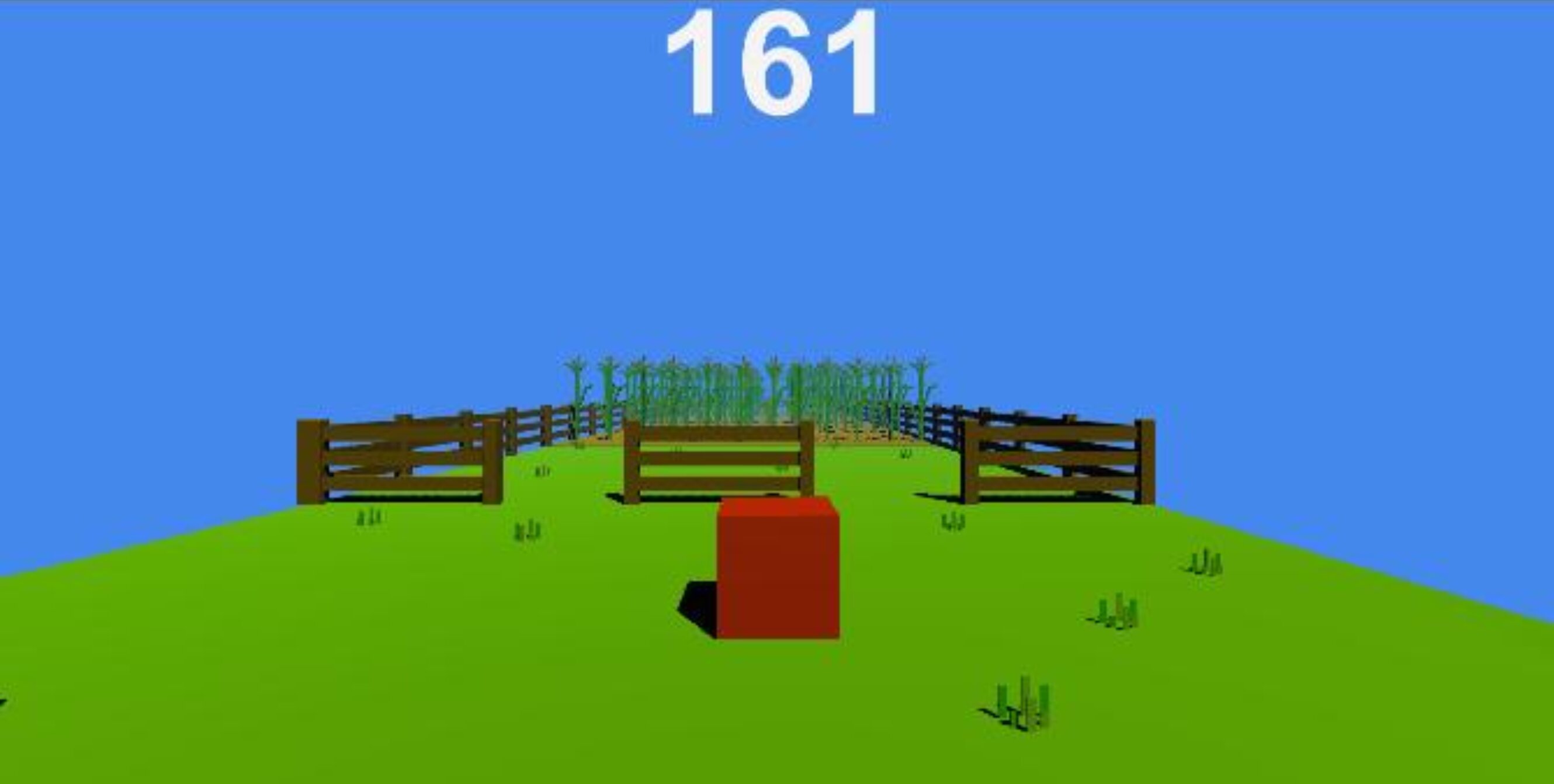
This was the first game I ever made. I believe I created it around Grade 8 while learning Unity for the first time. The idea was simple: the player controls a red block moving down a path while trying to dodge obstacles.
The farther the player travelled, the higher their score became. The game was not endless, so the goal was to make it as far as possible through the track without crashing into the objects along the way.
The player used the arrow keys to move left and right while the block accelerated forward down a narrow track. Obstacles were placed along the path, and the player had to react quickly to avoid them. I built the level in Unity using simple shapes, terrain, fences, trees, and obstacles. Even though the mechanics were basic, it was my first experience making something interactive in a game engine.
Unity editor view and gameplay screenshots from my first game project.
The player controlled a red block using the arrow keys, moving left and right while travelling forward down the track.
Obstacles were placed along the path, and the player had to avoid them while the block continued moving forward.
The game awarded points based on how far the player travelled, giving the player a simple goal to keep pushing farther.
This project introduced me to Unity, basic player controls, collision-based gameplay, score tracking, and building a playable scene from simple objects. It also helped me understand how game objects, levels, cameras, and player input work together to create something interactive.
This game was very simple, but it was an important starting point for me. It was the first time I made something that felt like an actual playable game. It is fun to look back at because it shows where my game development interest started, before I moved on to larger projects with more mechanics, menus, art, and structure.